
The ionava Wallet: Everything you wanted to know
Aug 31, 2026 · 5 mins
On this page
The Money That Never Counted
The average health conscious American spends around $1,800 a year on wellness—fitness, supplements, therapy, recovery—that never comes from their insurance plan.
Money spent on wellness leaves your account every month and builds toward nothing.
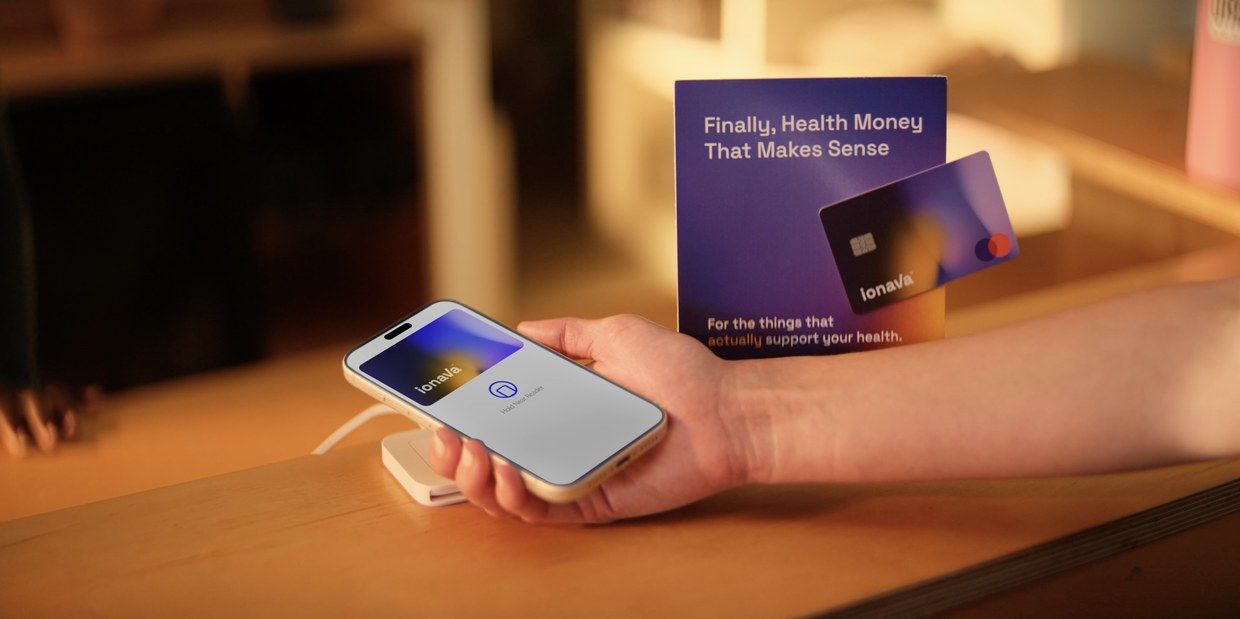
That’s why ionava built the Wallet. It’s cash for your everyday health and wellness spending, in the form of a digital debit card. Unlike an HSA, there are no restrictions and no high-deductible plan you’re forced to pair it with. It’s your money, and you decide where it goes.
Here’s how it works.
The Basics: Your Money, Working for You
70% of the subscription price you pay (to have ionava Vault protection—more on that below) goes straight into your Wallet. It stays yours, earning 1 – 3% interest while it sits there. This range is based on your health goals logged in the ionava app. The more you focus on achieving your health goals, the higher your interest rate.
You can then decide if you want to save it for future health expenses or if you want to use it for the everyday wellness you are already paying for (think supplements, acupuncture, gym, etc).
Here are a few scenarios of the Wallet in action.
A Sample ionava Budget
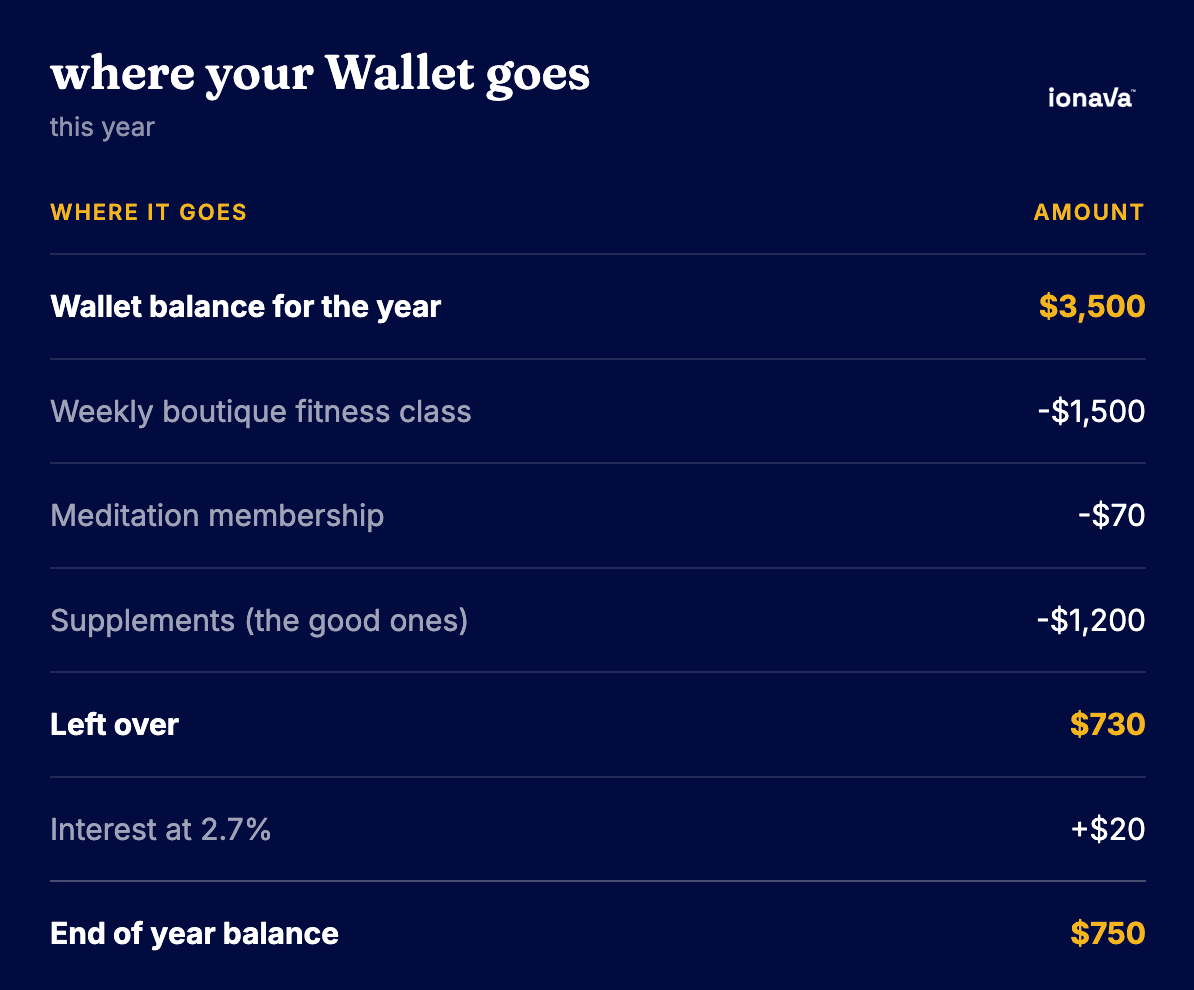
Say you have a $700k Vault with a $5,000 annual subscription. 70% of that—$3,500—lands in your Wallet each year (immediately if you pay annually). Here are two ways it could work.
Option 1 — Spend it on everyday wellness.
You paid a full year of the wellness spending you already have, and still finished with $750 in your Wallet to use for next year.
Option 2 — Save it for a ‘Small What-If’.
Another way to use the Wallet is to think of it as a savings account that’s ready to pay for moments that aren’t catastrophic but still cost real money. A torn ACL. A pregnancy*. An accident that leads to months of physical therapy.
Let’s take a look at what happens if you decide to save the $3,500 per year in your Wallet. At 2.7% here’s how it goes:
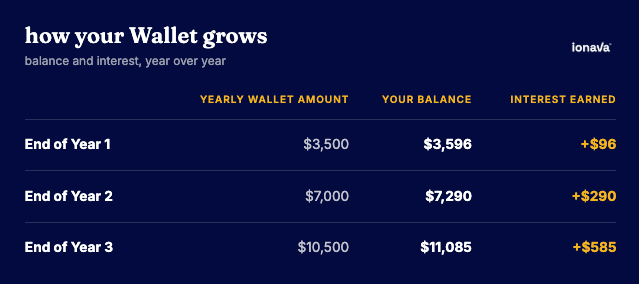
This is just a sample scenario—you don’t have to leave all the money sitting in your Wallet for three years for it to work.
Say you have a small injury. You twist your ankle and end up in urgent care. The average cash cost runs about $1,700, which still leaves plenty in your Wallet.
But what about the freak accidents? The ones that happen maybe 0.01% of the time?
In this example let’s assume a broken elbow where the first heal doesn’t take, so it has to be re-broken twice: seven months of care, around $15,000 in cash prices. Even here, after your Wallet you’d have roughly $4,000 more to pay—about what you’d owe under traditional health insurance anyway if you hadn’t met your deductible that year.
What About the ‘Big What-Ifs’?
Meet the ionava Vault.
After walking through everyday spending, the next question we usually get is:
What happens if something truly serious happens?
A terminal, critical, or chronic illness isn’t a ‘Small What-If.’ That’s what the Vault is for—reserved cash that unlocks large amounts of liquidity during with no restrictions on where it goes when a doctor determines there is a defined Major health event..
The Wallet carries the everyday. The Vault stands behind the ‘Big What-Ifs.’ Together, that’s the whole picture.
Want to go deeper? Check out our article on the Vault.
Got Questions?
Reach out to our team at support@ionava.com—we’re here for you..
Join our AUA (ask us anything) sessions available on our website.
*Quick one on pregnancy: If you are planning on getting pregnant we suggest layering ionava on top of a traditional health insurance plan. This will give you the most ROI throughout pregnancy and post-partum.